POC, VAH and VAL: Reading the Value Area Correctly
The value area is the heart of Market Profile. It answers the most important question of the day: where does the market consider price fair?
The three levels
- POC (Point of Control): the price level with the most TPOs – the price traded longest during the session. The fairest price of the day and a strong magnet.
- VAH (Value Area High): upper boundary of the range containing roughly 70 % of TPOs.
- VAL (Value Area Low): lower boundary of that range.
Unlike tails, these three are levels, not zones: they are always displayed and don't "end" with a close through them. Their meaning does change with context, though.
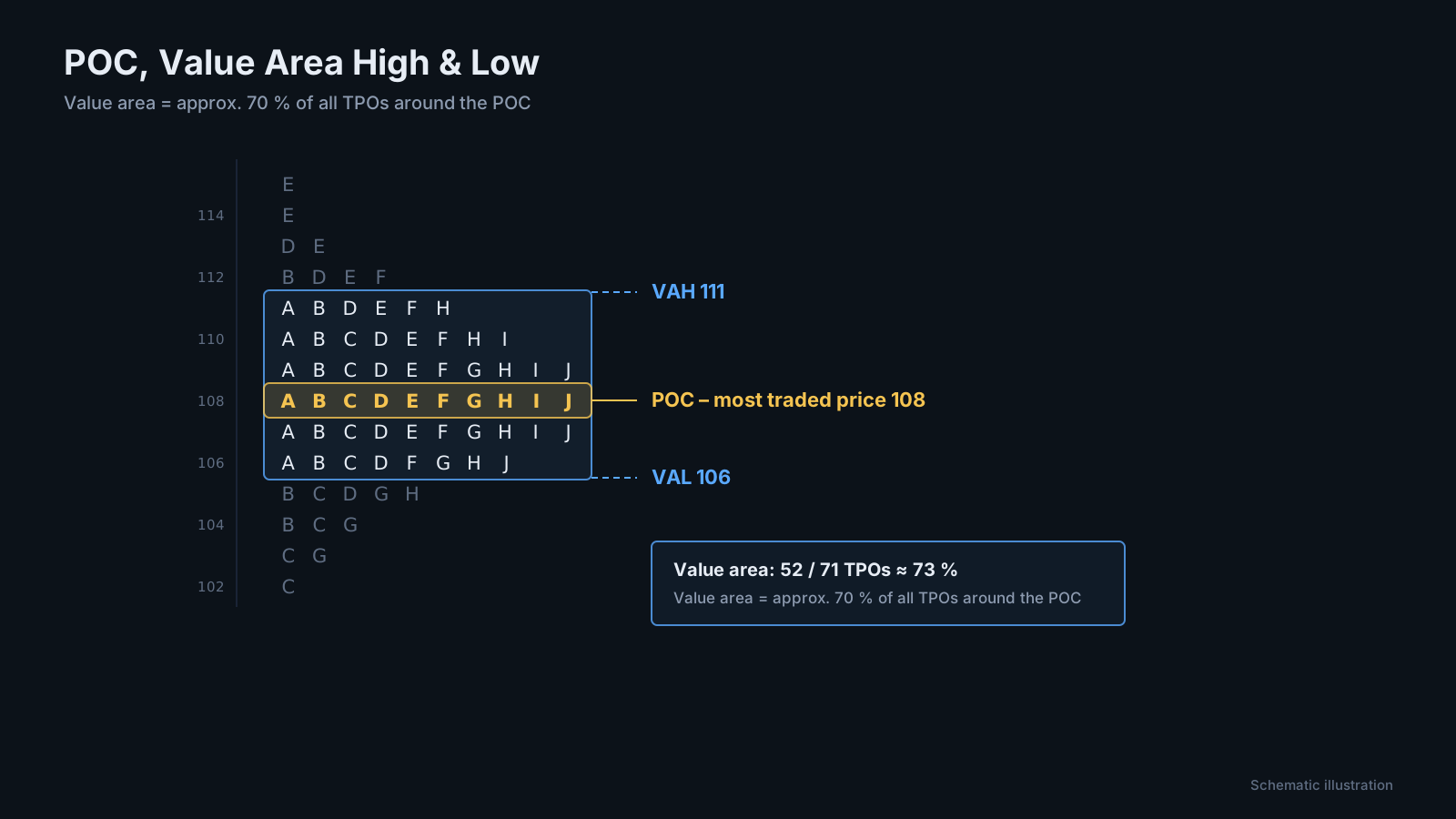 📷 POC, VAH and VAL in a TPO profile
The key rules
- Open inside yesterday's value area: expect a rotational day. Trade from VAH to VAL and back, POC as target.
- Open outside, return into the value area (80 % rule): if price holds inside the value area for two periods, there is a high probability it traverses the whole area.
- Acceptance outside the value area: several periods outside mean the market is seeking new value – trend-day potential.
- Naked POC: a POC from a previous day that hasn't been touched since acts as a magnet.
Time window
Whether you build the profile over the full session or only regular trading hours (RTH) noticeably changes the POC and value area. For NQ, ES and RTY many traders work with the RTH profile but keep the overnight levels as an additional reference. ASPTPO lets you choose the time window freely.